Making Cash Policy Stick
The idea that direct cash helps people isn’t new anymore. What’s new is that it’s becoming harder to undo.
“Life transitions, like starting or growing a family, aging out of foster care, the aftermath of climate disaster, returning home after incarceration, or changing jobs are inherent moments of instability. Providing a guaranteed income, or cash in transitions, allows people to navigate these moments with dignity and agency,” said Shafeka Hashash, Director of Cash Initiatives at ESP.
Since launching in 2016, the Economic Security Project (ESP) has helped build the evidence base, political infrastructure, and public support for guaranteed income and direct cash programs. In the past four years, more than 30 state-level expansions of Child Tax Credits and Earned Income Tax Credits have passed across 20 states and the District of Columbia. Local governments like Cook County and Los Angeles County have moved past pilots and started embedding cash into how they support residents permanently. The Guaranteed Income Community of Practice, which now includes more than 1,600 members, has supported over 160 pilots and seeded 17 state coalitions.
“Life transitions, like starting or growing a family, aging out of foster care, the aftermath of climate disaster, returning home after incarceration, or changing jobs are inherent moments of instability. Providing a guaranteed income, or cash in transitions, allows people to navigate these moments with dignity and agency.”
Shafeka Hashash, Director of Cash Initiatives at ESP
In 2025, ESP sharpened its focus on what it calls “cash in transitions”—getting resources to people at the specific moments when costs spike and incomes fall short.
That focus came with a broader coalition-building effort. ESP expanded its base of champions to include more voices from rural communities, Latino communities, and politically contested states and districts. The goal is practical: a movement that reflects the country is a movement that’s harder to dismiss.
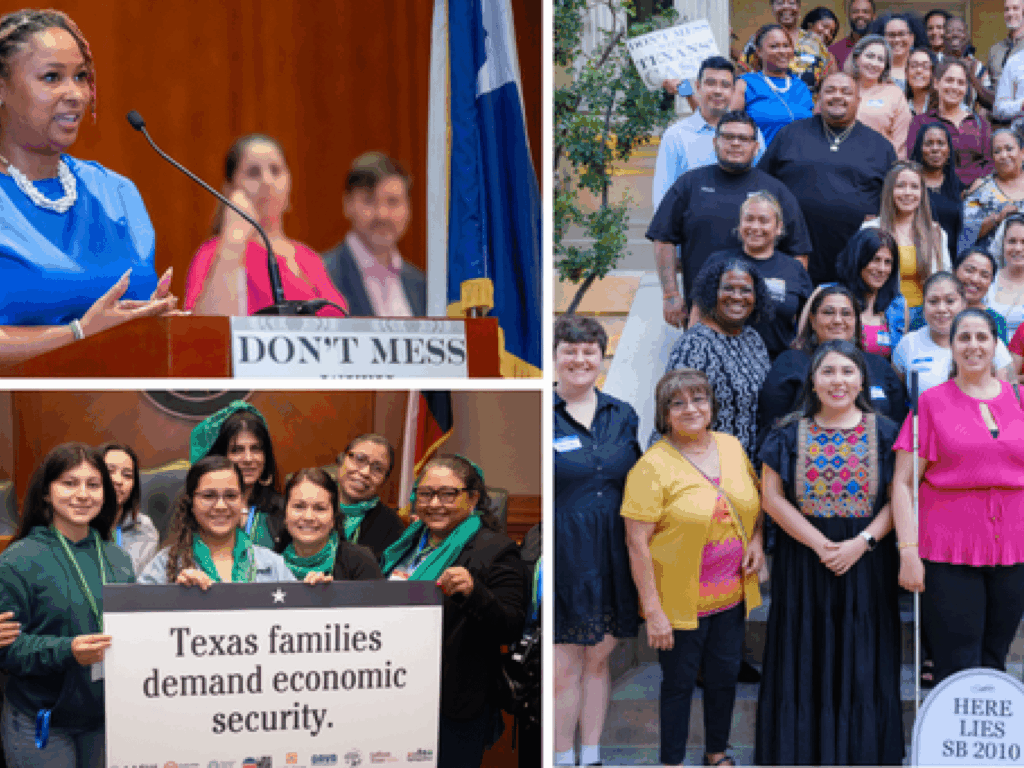
That resilience was tested directly in 2025. In Texas, legislation was introduced to ban guaranteed income outright. A statewide coalition that ESP helped establish organized stakeholders, engaged policymakers, and defeated the bill. The ability to play defense—to protect gains in hostile conditions—may be the clearest sign yet that this work has matured beyond advocacy and is emerging as durable infrastructure.
“The policy conversation has shifted,” Hashash said. “The work ahead centers on permanence and accountability: making cash reliable, defending it against efforts to narrow its reach, and ensuring it remains a tool for racial and economic justice even as it gains broader political currency.
Perhaps the most telling indicator of progress is this: across the political spectrum, leaders now want to claim direct cash as their idea. Baby bonds, early childhood savings accounts, expanded tax credits—the frameworks ESP helped popularize—are showing up in proposals from both parties.
The policy conversation has shifted, the work ahead centers on permanence and accountability: making cash reliable, defending it against efforts to narrow its reach, and ensuring it remains a tool for racial and economic justice even as it gains broader political currency.
Shafeka Hashash, Director of Cash Initiatives at ESP