
Designing Medicaid Applications That Don’t Push People Off Coverage
When Congress passed H.R. 1 and its new Medicaid work requirements, states faced a ticking clock. They had a limited window to implement the rules, and the choices they made—about forms, online systems, letters and verification steps—would determine whether millions of eligible people kept their coverage or lost it to paperwork.
Civilla, a design organization that specializes in making public benefits systems work for the people who use them, moved fast. Civilla pulled together previously unpublished research on work requirements into a public report offering states practical, evidence-based guidance for reducing administrative burden across four critical touchpoints: applications, letters and notices, text communications and online flows.
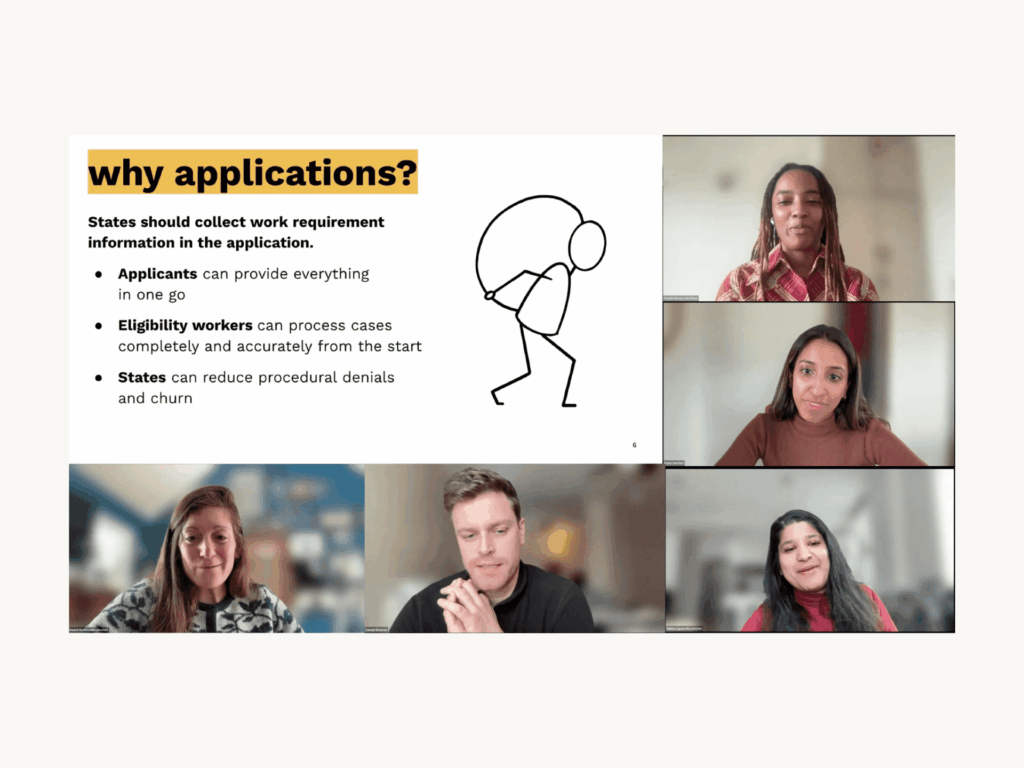
The problem Civilla identified was specific and fixable. Many states and vendors were planning to collect work requirement information through separate, post-application verification steps—another form to track down, another deadline to remember, another chance for eligible people to fall through the cracks. Civilla’s research recommended a better approach: integrate the questions directly into existing Medicaid applications, using plain language that people actually understand.
“Behind every Medicaid application is a person trying to feed their kids, pay their bills, manage a chronic condition, or hold together a household on a limited income. When the process for maintaining coverage is designed without these realities in mind, eligible people lose benefits they need and qualify for,” said Julia Dale, Civilla’s CEO.
To back that up with something states could use immediately, Civilla conducted 11 rounds of testing with residents from across the country—representing a range of work situations, family sizes, ages, races, and health statuses—and designed paper and online application templates that states could drop into their existing systems. A second report, released in February 2026, included those templates alongside policy guidance, online prototypes, and open design files that states could adapt to their own circumstances.
“Behind every Medicaid application is a person trying to feed their kids, pay their bills, manage a chronic condition, or hold together a household on a limited income. When the process for maintaining coverage is designed without these realities in mind, eligible people lose benefits they need and qualify for.”
Julia Dale, Civilla’s CEO
The response was strong. State Medicaid agencies, benefits technology vendors, and peer organizations working on implementation engaged with the resources. The layered design—downloadable templates for states ready to adopt them and plain-language question guides—met agencies wherever they were in the process. Civilla also issued five key policy recommendations now shaping how states think about decisions that will determine whether the new rules protect coverage or create new barriers.
The work ahead is about correspondence: making sure the notices, letters, and texts that states send to residents are clear enough that people actually know what’s being asked of them and when. Civilla’s earlier research showed how easily residents miss critical deadlines when notices bury required actions or look like routine mail. Designing those communications well is the next step to make sure a complex federal requirement doesn’t become a coverage cliff for the people who can least afford it.