Building the Systems That Keep Green Infrastructure Working
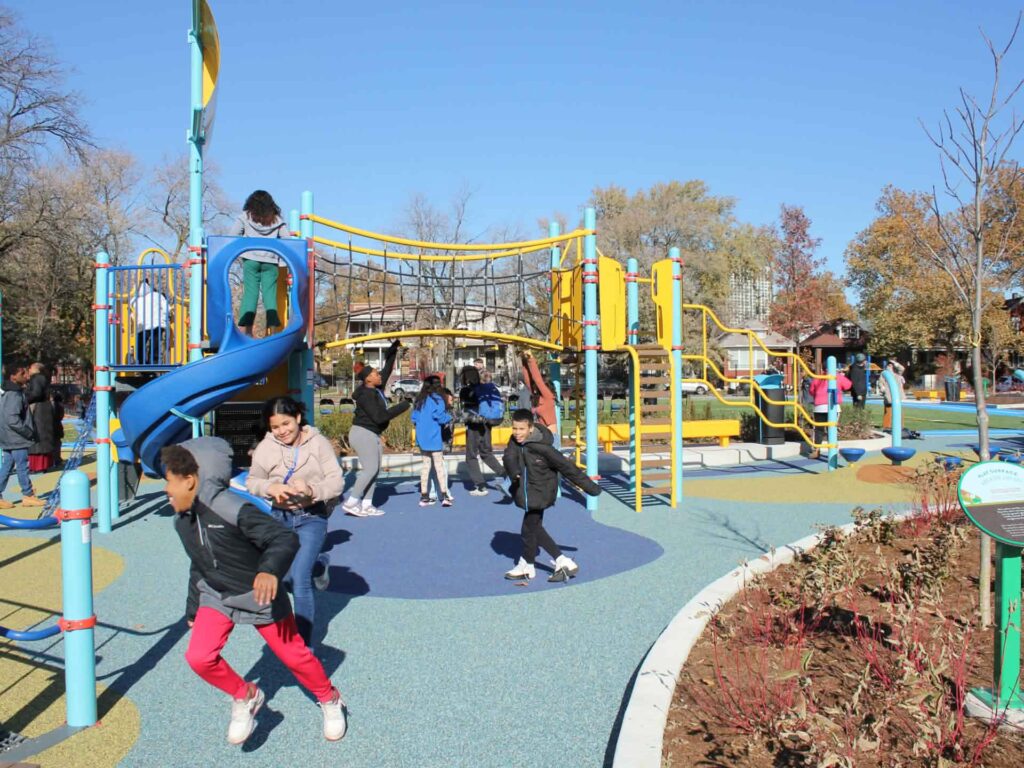
Building a green schoolyard is one thing. Making sure it still works a decade later—capturing stormwater, serving students, strengthening a neighborhood—is something else entirely. In Chicago, Healthy Schools Campaign is tackling that harder, less visible challenge head-on.
“While significant investments have been made in public green infrastructure, there is often less clarity around long-term responsibility, funding and upkeep, putting the effectiveness of these systems at risk,” said Emily Zhang, Space to Grow Project Manager.
Through its Space to Grow program, which was co-founded with Openlands, Healthy Schools Campaign has spent more than a decade transforming Chicago schoolyards into community-designed green spaces supported by teacher training, wellness team support and technical assistance. That deep experience revealed a critical gap: without coordinated maintenance, green infrastructure underperforms, and the communities most affected are those already facing disinvestment and disproportionate flooding.
“While significant investments have been made in public green infrastructure, there is often less clarity around long-term responsibility, funding and upkeep, putting the effectiveness of these systems at risk.”
Emily Zhang, Space to Grow Project Manager
In 2025, the organization moved to close that gap. With Openlands, Healthy Schools Campaign has assembled a committee of seven Chicago city departments—including the Chicago Department of Environment – to develop a coordinated, long-term system for public green infrastructure upkeep, a first-of-its-kind effort for the city. Within it, they are bringing together a committee of seven Chicago city departments to develop a coordinated, long-term system for public green infrastructure upkeep, a first-of-its-kind effort for the city. They are also piloting practical solutions on the ground, including a training series designed specifically for school building engineers responsible for maintaining these spaces day to day.
The momentum is building. The interdepartmental committee has been asked to serve as the steering committee for Chicago’s upcoming Green Infrastructure Strategy update, elevating maintenance as a citywide priority alongside new investments in green infrastructure. Next, the team is advancing a shared inventory of public green infrastructure assets, assessing funding pathways, and building broader public support for sustained investment.
The vision is clear: schoolyards and green infrastructure are being recognized as critical health, climate, and social infrastructure. And there is a commitment to keep them maintained, functioning, and delivering benefits for years to come.